A useful brush-pile photo set shows the material from far enough back to understand its volume, then closes in on thorns, hidden wire and the route out. Five deliberate photos beat twenty close-ups without context.
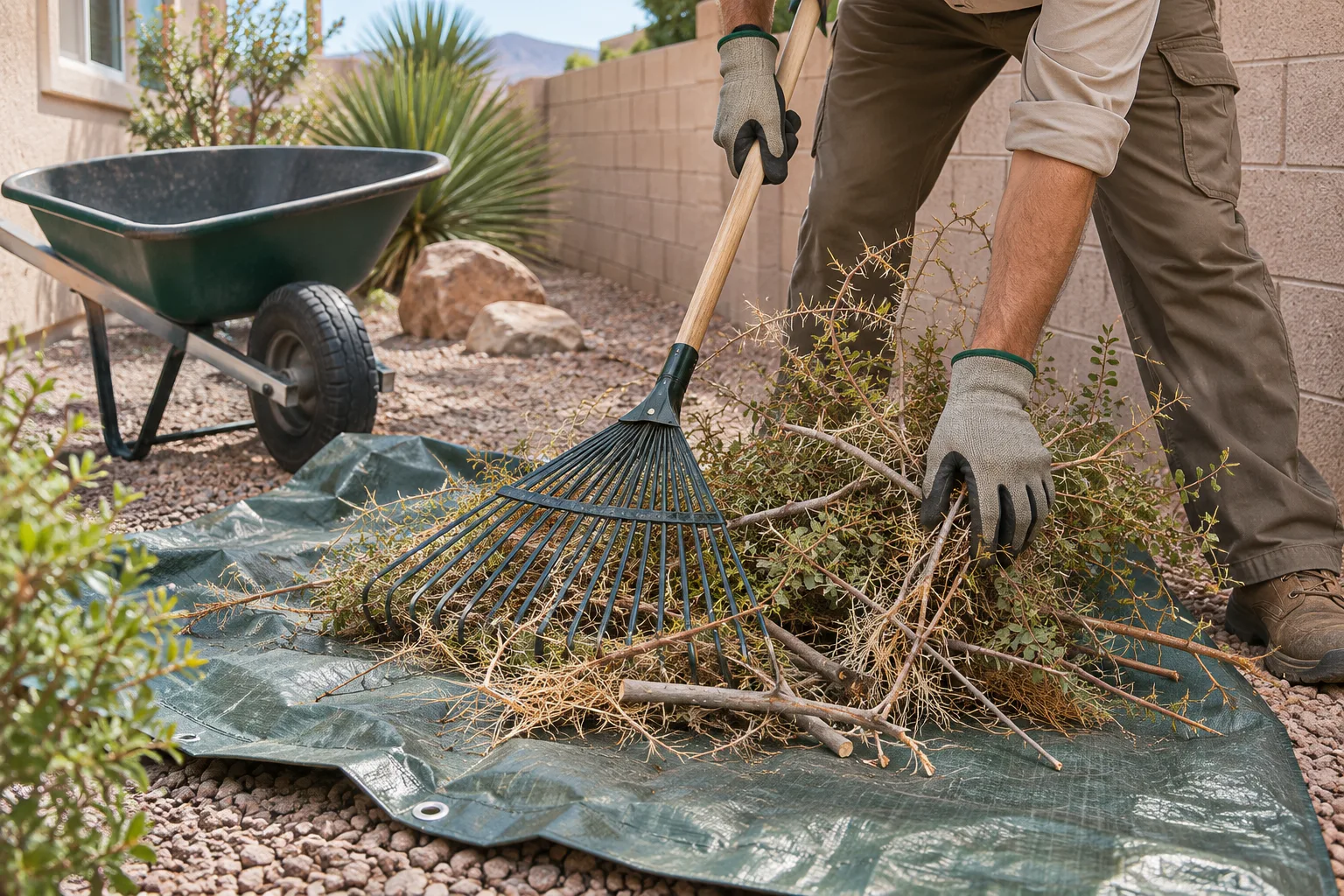
Photograph the pile as a whole
Stand where the entire pile fits in the frame. Include a gate, wall block, wheelbarrow or tape measure for scale. Brush traps air, so a neat-looking edge may hide a deeper tangle.
Show what makes handling different
Take one close photo of thorny stems, cactus, wire, irrigation tubing or anything else mixed into the vegetation. Do not reach into the pile to improve the picture. If you cannot identify what is inside, say that directly.
Walk the route with the camera
Photograph the narrowest gate, the tightest turn and the proposed loading point. Show steps and sloped gravel. A straight 30-foot carry across open pavers is a different job from the same distance through a gate and around pool equipment.
| Frame | Decision it supports |
|---|---|
| Whole pile | Loose volume and overall material mix |
| Sharp material | Containment and protective handling |
| Ground contact | Whether soil, rocks or irrigation pieces are mixed in |
| Gate and turns | Carry method and piece size |
| Loading point | Distance and vehicle access |
Keep unsafe work out of the photo session
Do not stand on brush, cut spring-loaded stems or move material near electrical lines. OSHA identifies struck-by, cutting and electrical hazards in tree and landscape work. The estimate can begin with honest limits: “the back of the pile is not visible” is useful information.
See what belongs in the brush removal scope and keep soil, chemicals and household waste in separate photos.